
The World of Water Discourse
Welcome to H2o Water Planet.

Millwall Dock, London, E14 – South looking East Before Sunrise.

Welcome
I am a water conflict and co-operation explorer, with a focus on one specific planetary boundary – Novel Entities (NE). My interest in NE began with Diethylstilbestrol (DES), a synthetic oestrogen used by my own mum in the 1960’s. It is an endocrine disruptor that most likely killed her nearly 30 years after she took it. She died from a very aggressive breast cancer in 1990. It took only a year to ravage her body. My research has lead me to explore the chemicals in nature and understand how they have now become problematic to the human condition. My role as an advocate for Novel Entities and water is not accidental. It has become a journey I have chosen. I’m a Golsmith’s grad (photography and anthropology) who became a UEA grad (international development and water security). I lived in South-East London for 36 years, I’ve lived in Norfolk and now settled in the depths of Kent. I’ve travelled, slightly and raised a family. Now I’m 52, I thought it was time to go on a deep and explorative journey into the unconscious of the water on our planet (I’ve also done a bit of breathwork and psychology).
Water is buried deep into my unconscious and my journey with it came to me in quite a few dreams. I have been called from somewhere in the unknown of our collective unconscious.
Water is taken for granted and experienced as a given by some but a precious resource to another. The tears I’ve cried and the sorrow I’ve felt have brought me to this page. And now you are here with me, exploring too. Welcome to my world of water, dangerous but exciting, calm but chaotic and certainly a different perspective to mainstream media. I hope to fill the many gaps I frequently see. Welcome to my perspective. Please feel free to contact me with any content ideas, click here for form.
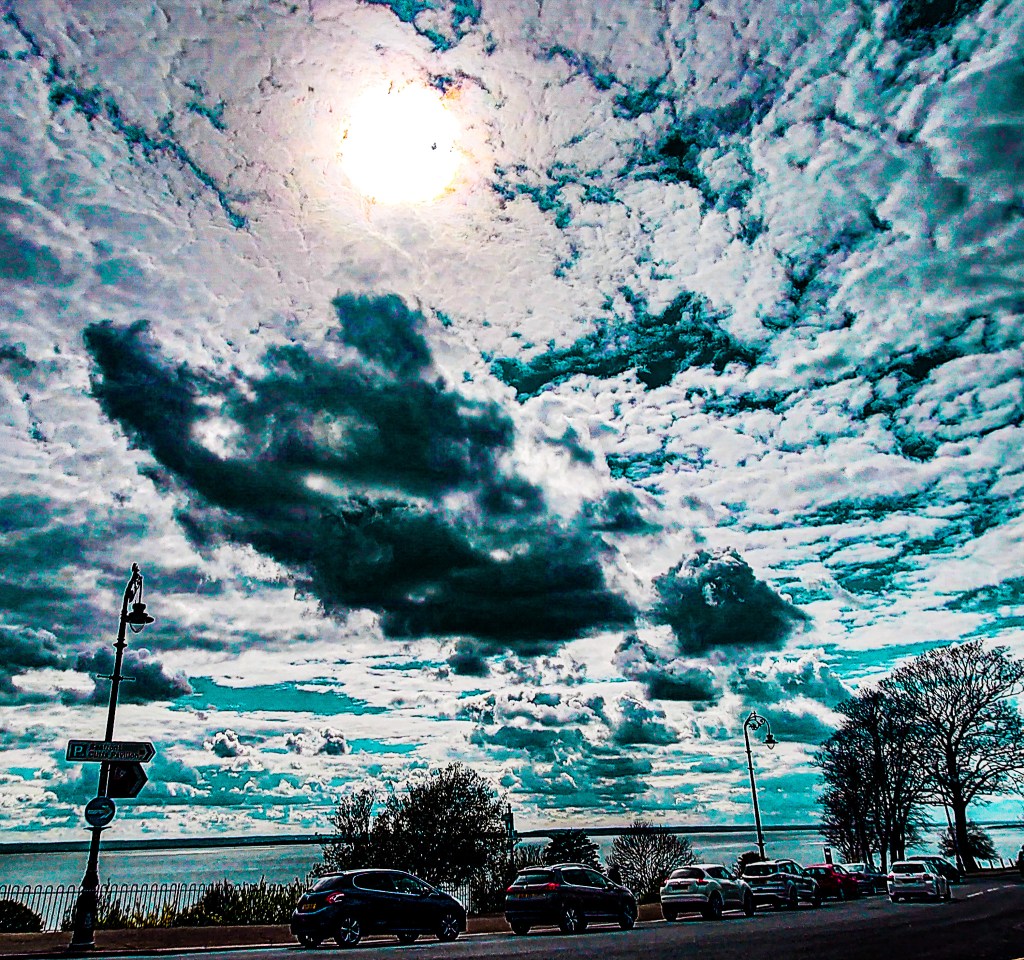
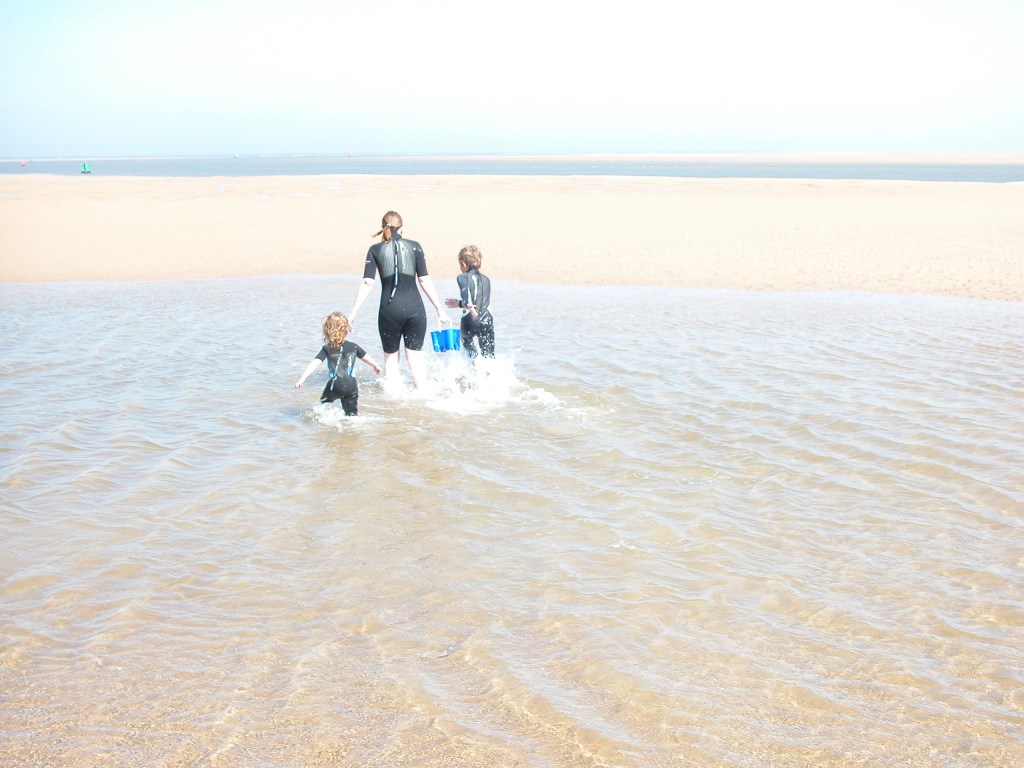
My Photography




Water Conflict

The only water battles ever are with ourselves because no matter how hard we battle, we lose, as capitalism takes a firm hand on our cultural, social, political and economic behaviour. There are currently more than 350,000 chemicals registered in Europe and North America alone, these chemicals are being allowed to circulate through the global eco-system. The Chemical Abstract Service (CAS) database has 279 million chemicals disclosed since the 1800’s.
Just some of those chemicals are embedded in mine and yours everyday life. The keyboard I’m typing on, the screen I’m seeing the words fall onto the page. They have a firm grip on the production of the ‘things’ we often find ourselves purchasing. My biggest battle and my greatest challenge has always been how do we ‘detangle’ from the culture we have created. Then I give up and retreat back into moments of meditation and mindfulness, cowering like a coward who doesn’t want to face up to the reality that I have been poisoned along my journey and how can I stop this happening to future generations?
In 1993 BBC Horizon aired Assault on the Male; What Synthetic Chemicals Negatively Affect Sperm Quality? Diethylstilbestrol, a synthetic oestrogen given to women between 1950- 1980 became one of the many contenders for the reproductive abnormalities in human males.
Lake Apoka, Florida, US, saw a reduction in the number of alligators and the region underwent research with a focus on abnormalities in genatalia and male species with high levels of female hormones (20% of the lakes population, including turtles). The inhabitants of the lake were having their endocrine systems disrupted, a symptom of synthetic oestrogen poisoning . Dr Theo Colburn from the World Wildlife Fund (WWF) furthered this research. The message from BBC Horizon was we are living in a sea of oestrogens in the guise of pesticides and pollutants. That was then and this is now and the male sperm count has significantly lowered, from 99million per ml in 1973 to 47.1 million per ml in 2011.
Novel Entities which include chemicals, pollutants, plastic and Teflon, remain a risk as they continue to flourish through our global ecosystem. They are not currently an imminent threat to humanity but have exceeded the safe operating zone and are now a high risk. Novel Entities have become an assault on humanity and have the ability to change our molecular structure. Synthetic oestrogens do not leave our system. My mum took DES in the 1960’s and she gave birth to me in 1973. I can only assume I absorbed it too, with some symptoms of synthetic oestrogen poisoning. Our endocrine systems are becoming fragile, lets hope not too fragile that we stop reproducing
Planetary Boundaries

The Planetary Boundaries framework was created in 2009 as a tool to measure the rising risk of the nine critical processes which regulate the stability and resilience of the Earth. In 2009 three of those processes had left the safe zone. In 2021 Johan Rockström and David Attenborough explored the collapse of Earth’s biodiversity and how to overcome it, in a documentary released on Neflix, Breaking Boundaries: The Science of our Planet. In 2025, seven of the processes have left the safe zone. Novel Entities (NE) are operating in the high risk zone.
Novel Entities
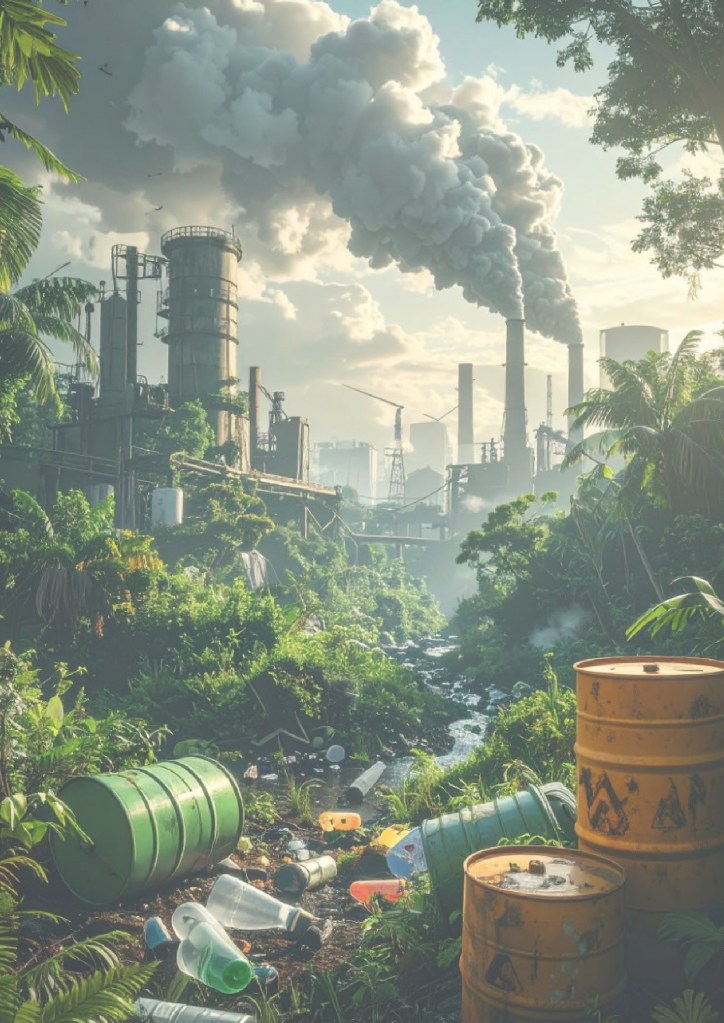
The following list includes major companies identified in industrial analysis for their significant role in the production or distribution of such entities as of 2026 (Google AI). This list will be reviewed and should not be taken as fact as it has been produced by AI. It is an example of how and why NE are produced. This list is not exhaustive and more research is needed to hunker down into the depths of NE production. Planet Tracker’s Novel Entities: A Financial Time Bomb is a good place to begin, with details on litigation concerns for Bayer, 3M (PFAS) and Solvay. The production of chemicals is becoming less financially rewarding as litigation payouts increase. Greenpeace have also produces Plastics, Profit and Power which explores the increase in plastic production, with a focus on Dow, ExxonMobil, BASF, SEBIC, Chevron Phillips, Shell and INEOS, highlighting that plastic production could triple by 2050.
Chemical & Plastic Manufacturers
These companies produce large volumes of synthetic chemicals and plastic polymers, which are primary categories of novel entities.
ExxonMobil: While primarily an energy company, its chemical division is one of the world’s largest producers of synthetic polymers and industrial chemicals.
LyondellBasell (LYB): A global leader in refining and plastic production, recently highlighted for its role in the “novel entities” financial and environmental risk landscape.
SABIC: The Saudi Basic Industries Corporation is a major producer of petrochemicals, polymers, and fertilizers.
Nouryon: A specialty chemical company with global operations producing various functional and performance chemicals.
Pharmaceutical & Biotech Companies
In the medical field, “novel entities” often refer to New Molecular Entities (NMEs) or biological products that have never been approved by regulators before.
- Pfizer: A leading pharmaceutical company that focuses on the discovery and production of novel drug therapies and vaccines.
- AstraZeneca: Heavily involved in developing novel biological treatments and chemical entities for oncology and respiratory diseases.
- Novartis: One of the largest developers of innovative medicines and novel chemical targets.
- Johnson & Johnson (J&J): Through its medical technology and pharmaceutical divisions, it develops novel biological and surgical entities.
- Dude Chem: A specialized firm focusing on “green chemistry” to produce active pharmaceutical ingredients (APIs) in a more environmentally benign manner.
- Emerging Biotech & Novel Target Firms
- Relation Therapeutics: A biotech company utilizing AI to identify novel biological targets for drug discovery.
- Biorelate: Uses AI and machine learning to help big pharma companies identify and validate novel biological entities and pathways.
Sustainability and Problem Solving


The Thames Tunnel
Where East London escapes to the South.
A Swimming Pool in Español (Balearic Islands)
Until we can’t.

Millwall Dock
South Looking East
 Melissa Ward